• In addition to being expert cooks, olive oil producers, ouzo and winemakers, Samians have a long tradition in pottery-making. Growing up in Mavratzaioi, my husband remembers 4 or 5 expert pottery makers who would carry their wares on the backs of donkeys to various villages across the island. Of course, large water jugs were the main product sold. Through evaporation, the water in the jugs could remain cold for hours.

    Just outside the village was an area where the red clay for pottery-making could be found. Even until the early 2000s, there were still artisans in the village who would produce the plates, jugs, and cups that are sold in shops in Pythagorio and other towns on Samos.

    Pottery-making has now shifted to villages that are more populated and less isolated than Mavratzaioi. Koumaradei and Milioi now host several pottery-makers and ceramic shops visited by the many tourists that come to the island. Our travels took us to Milioi, known for its juicy oranges and a ceramic workshop, run by Alex and his family. (It also is known for having a 2000 year old olive tree!)

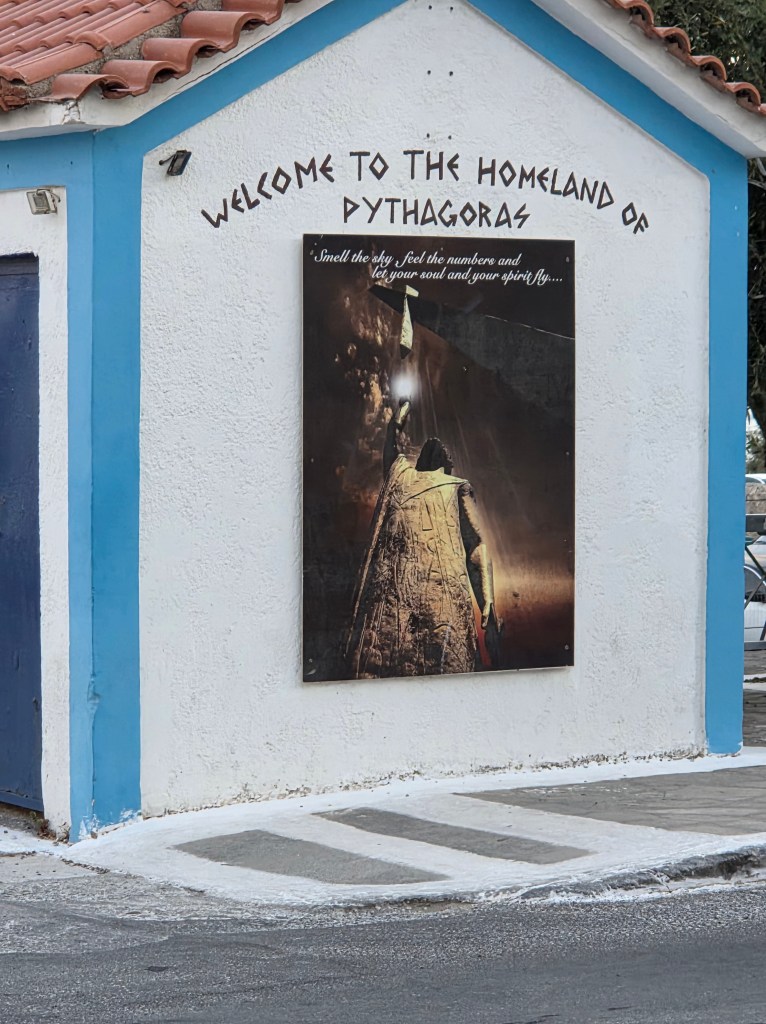
    Unique to Samos is the Pythagoras’ cup, otherwise known as the “greedy cup”. Produced in ancient times, the cup reveals its owner’s character. Filling it beyond what would be a normal serving of wine, leads to all the contents spilliing out the bottom. So don’t be greedy!

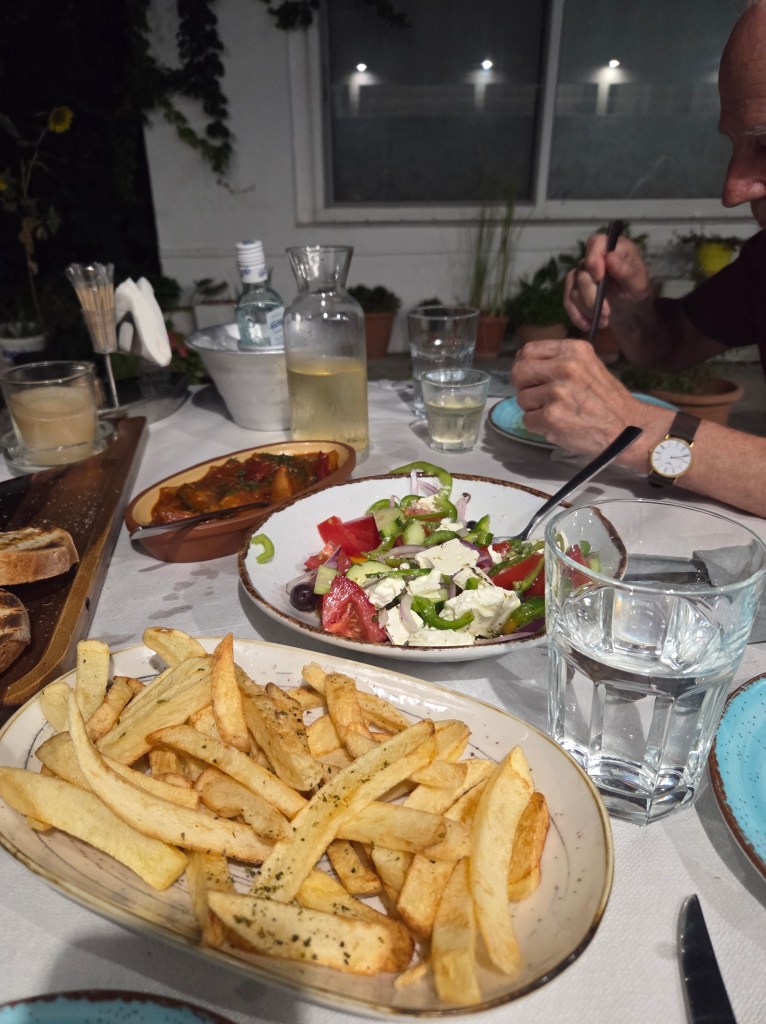
  • Greek cuisine is not known by most people as having a reputation for being as well-known or as refined as french or italian cuisine. However, once you have tasted a fresh greek salad (horiatiki) with a giant slab of feta cheese, olives, fresh tomatoes and cucumber, and a dash of olive oil from the countryside, you will wake up to its under rated pleasures. Perhaps it has something to do with the time and place in which you eat that greek salad – usually in a little family-run taverna, with soft breezes blowing off the ocean, in the coolness of a Greek summer night, with the waves lapping up on the shore.

    Even in little taverna beside our favourite swimming spots, you can find wonderful home-cooked meals of briam, moussaka, souvlaki, or kalamari, always served with a refreshing bottle of cold water, a small glass of local wine or a shot of souma. And the fries! Who said the Belgians make the best ones! Tzatziki, taramasalata or tirokeftiri (spiced feta) dipped in bread are also memorable items on the menu.

    Given the climate, the atmosphere and the sunshine, Greece produces fruits and vegetables that taste better then anywhere else in the world! Somehow local farmers are able to tease out wonderfully tasting fuits and vegetables from their rocky, clayy soil! You haven’t tasted a good peach or watermelon until you have tasted Greek ones!

    Because of the heat during the day, most women cook their food for the day in the early morning, to be eaten just after noon, before the big siesta, when everything shuts down and locals rest – or swim – or watch their favourite programs on TV. Delicious smells come wafting out of the houses of townspeople during the morning hours. After the big siesta, a small snack is eaten, after which friends and neighbours gather at their homes or at the kafeneion. If they are going out for a meal, it is usually after 9 pm, when traffic get snarled on the roads and you can hear little children playing outside until their bedtime after midnight.

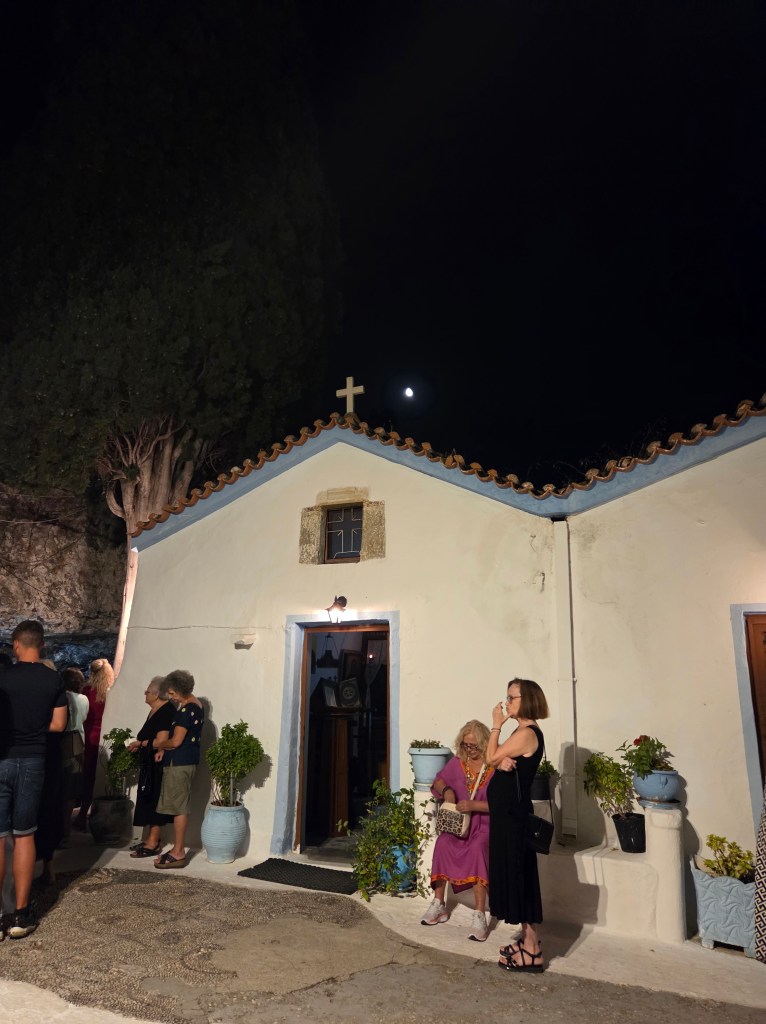
  • Visiting Greece during August ensures you will be exposed to festivals and church services that celebrate various saints and of course the Virgin Mary, during the “dekapenda augusto” (15th of August) holidays, when most Greeks leave the capital Athens and return to their family villages and islands to swim, visit with family and celebrate at “panayiria”. Most panayiria take place in village squares around churches dedicated to the Virgin Mary or Panayitsa. On Samos, Greeks celebrate almost nightly at small village festivals where the traditional wheat based stew called “yiourti” is often prepared over night to be served at the church service in the morning.

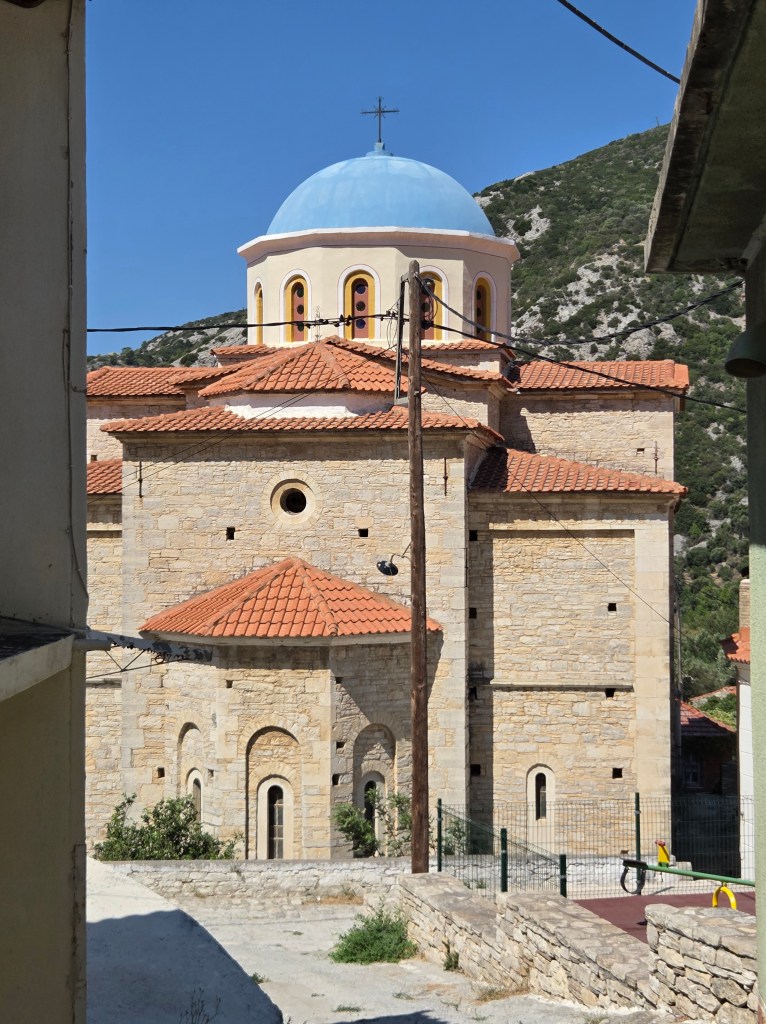
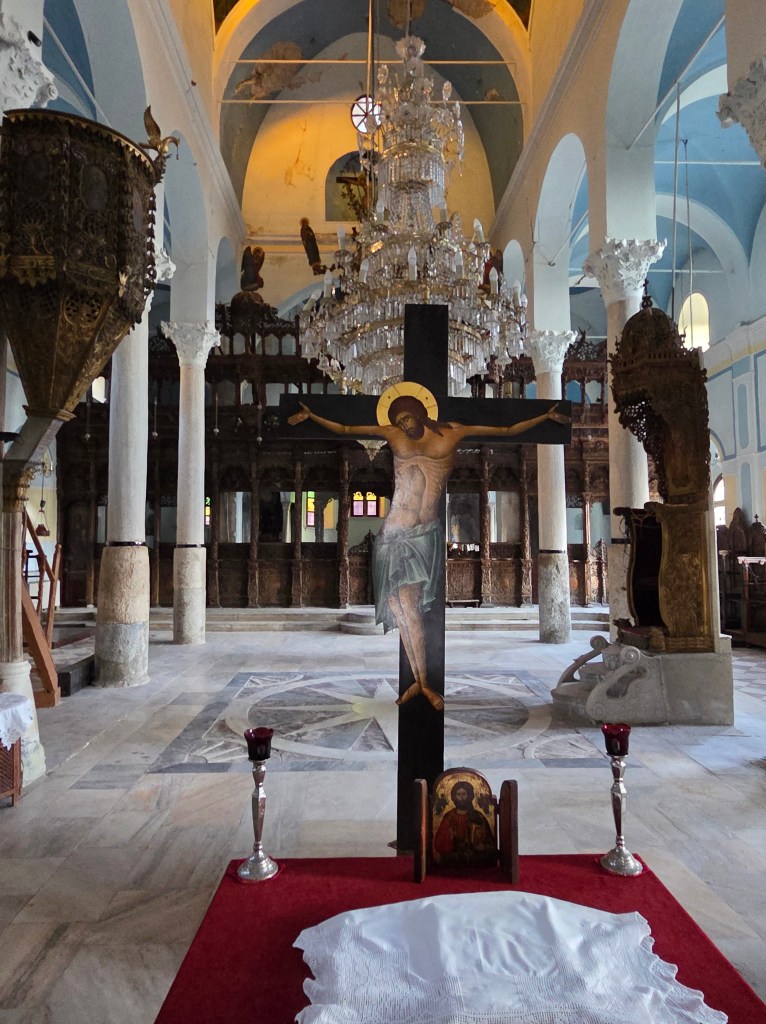
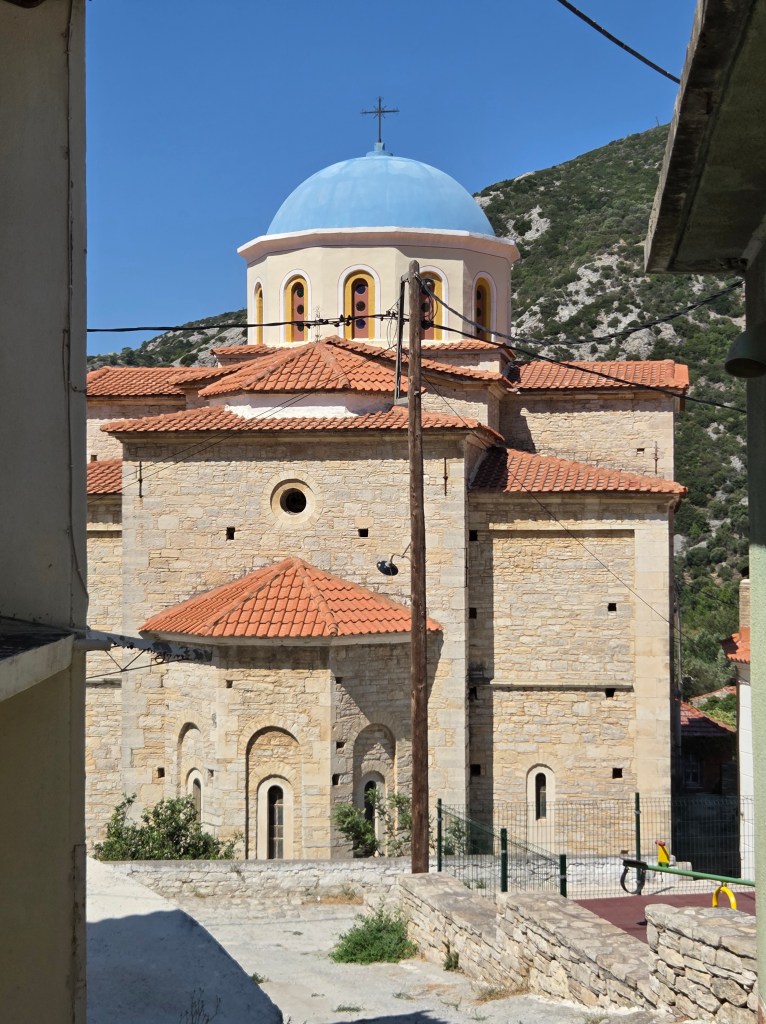
    There are several monasteries on Samos – Timios Stavros, Megali Panagia, Zoodocho Pigi that are still cared for by small contingents of monks. In addition every village has at least one church if not several honouring different saints. In Mavratzai, there is a Saint George – the main church, a Saint Dimitrios, a Saint Pantelemon. There are also little chapels and churches dotted across the countryside and atop the high mountains of Karvouni and Kerkis – usually Profitis Ilias – honouring the sun, and other saints. These small chapels are cared for by families on whose land they were built. Saint Fanourios is another saint who will be celebrated in August with the sharing of the yiourti and the famous “fanouropita”, which is a cinnamon spiced cake dutifully prepared and prayed on before sharing with others when searching for an answer, a solution, something lost or for a wish to come true.

    It is very clear that Greece still remains a primarily christian country, preserving thousands of years of faith and tradition that add to its interesting and joyful culture for all to enjoy.

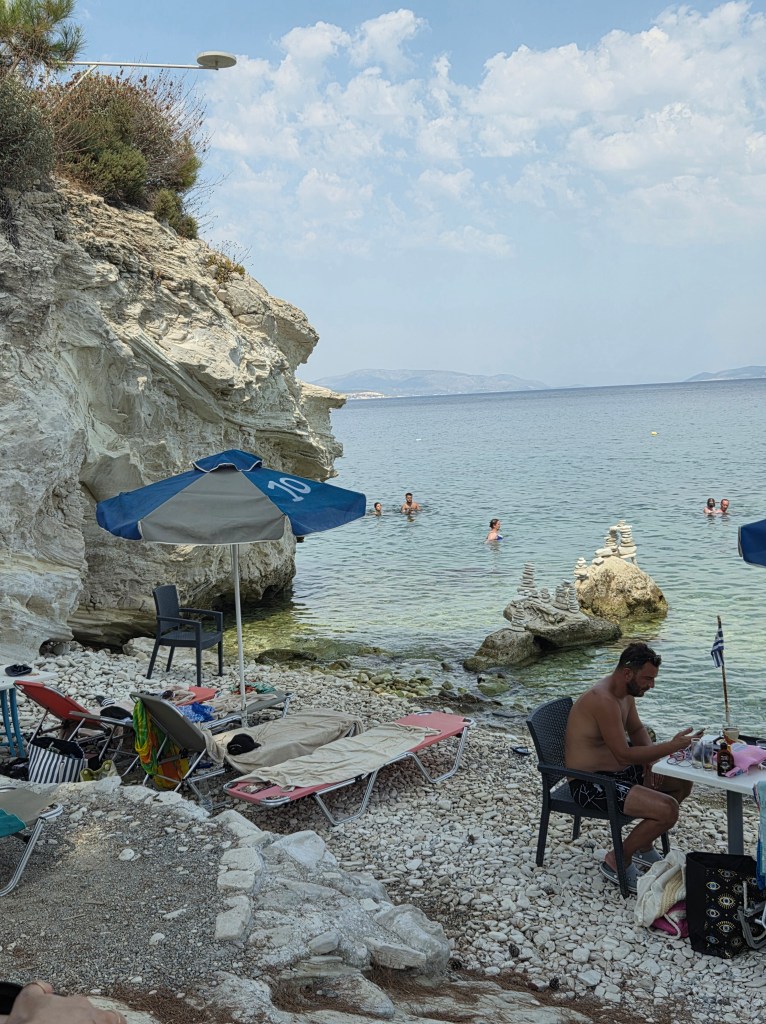
  • Samos has some of the best beaches for swimming. If you drive around the island, you are bound to find a wide variety of attractive spots to swim, from shallow sandy beaches such as Psili Ammos, to pebby or rocky jewels, such as Tsamadou or Mikali. But our favourite spots for swimming are on the south side, in Potokaki and Ireon (facing Turkey). This is where families like to swim, and you will find them there in August from 11 am until 5 pm. A recent find of ours is Pappas beach on the west side of Ireon. After travelling down a bumpy gravel road, we were rewarded with a lovely little out of the way swimming spot. Run by the Pappas’ children and grandchildren, this charming spot with a great kitchen and delicious food sadly recently experienced a fire that burned down the restaurant. However, with the help and donations of local villagers and islanders from the diaspora, they were able to rebuild, much to our benefit.

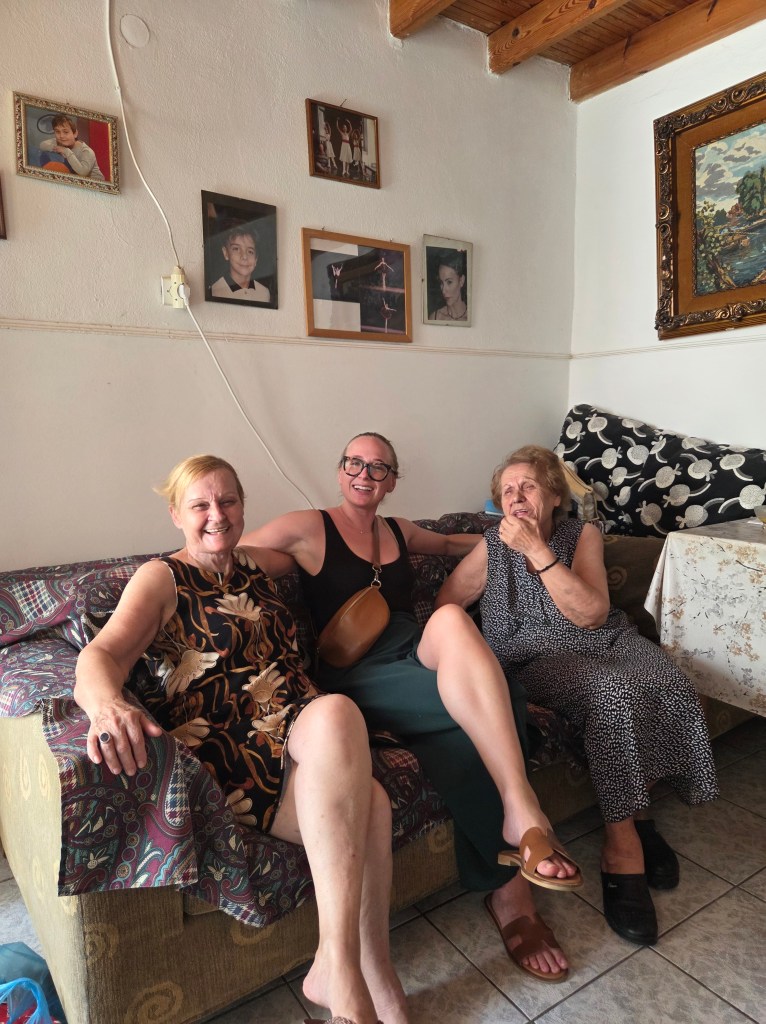
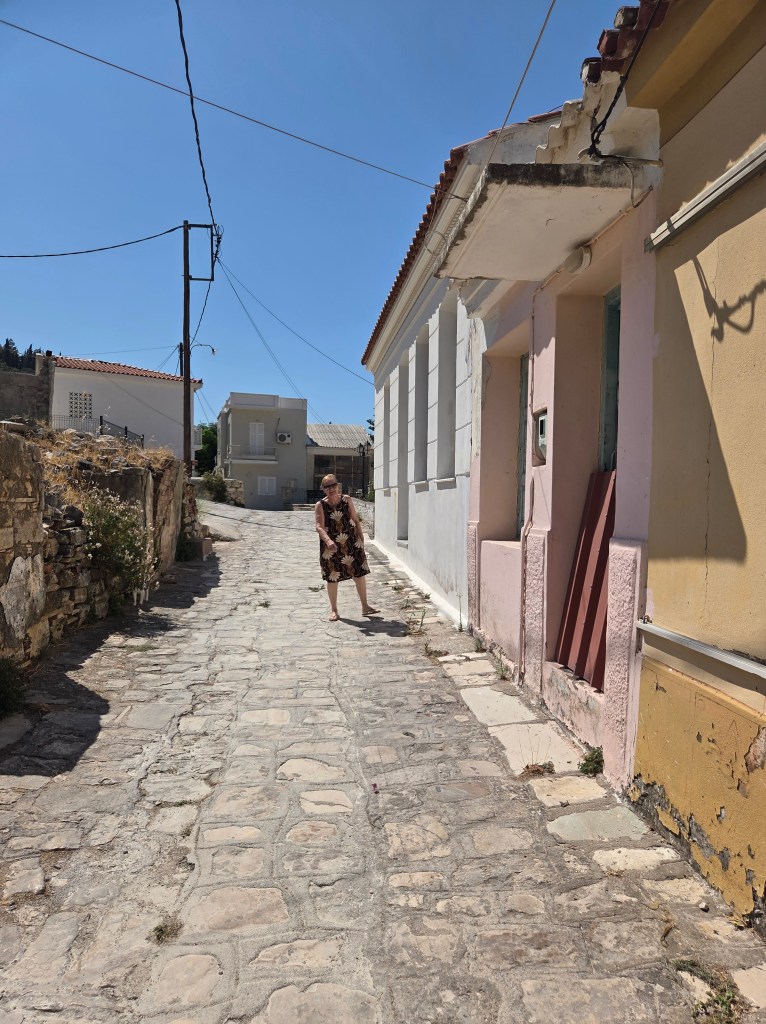
  • We always must make the pilgrimmage back to the village, the birthplace of my husband, when we visit Greece. Family is still there and are always happy to see us when we show up annually. It is an old village, and like many others around Greece, half abandoned with tumble-down houses next to those that are occupied. Living among the ruins so to speak. But perhaps this was forever thus in this land of past civilisations.

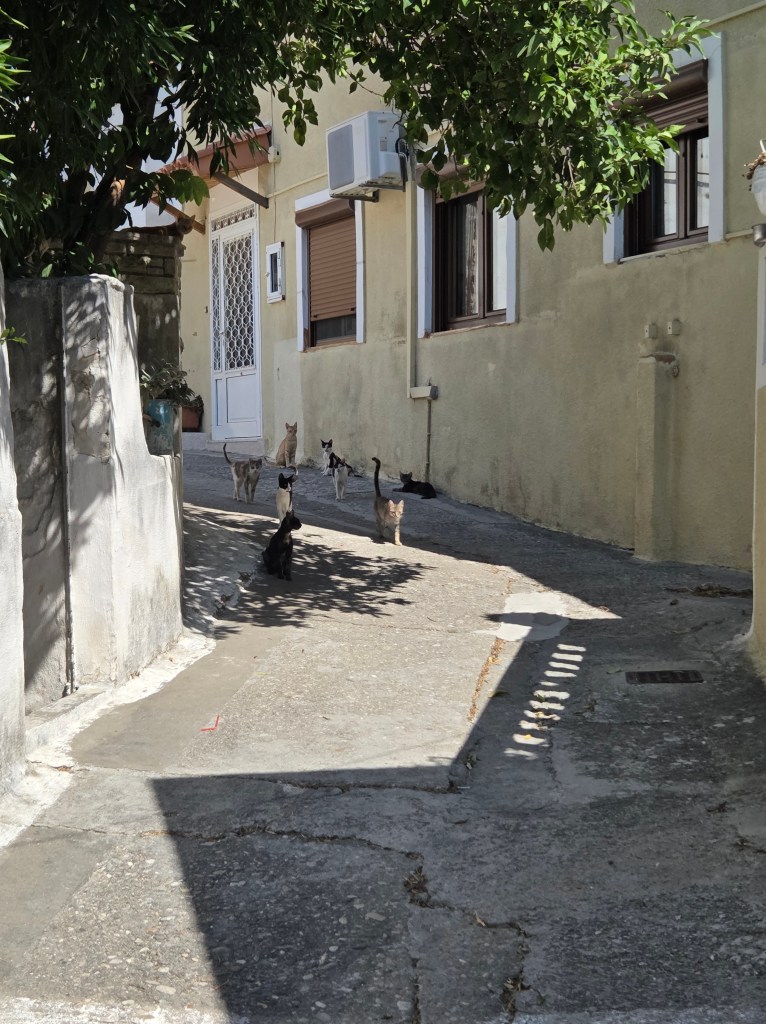
    The centre of the village is of course the church- and the Kafeneion. One can always find a spot to sit and chat with villagers over a coffee or ouzo. Also a mainstay in every village are cats! The cats of Greece! Originally brought to Greece from Egypt, the greek cats with their very slender bodies and prolific collective prides, are essential for maintaining the mouse, rat, snake and scorpion populations in these villages.

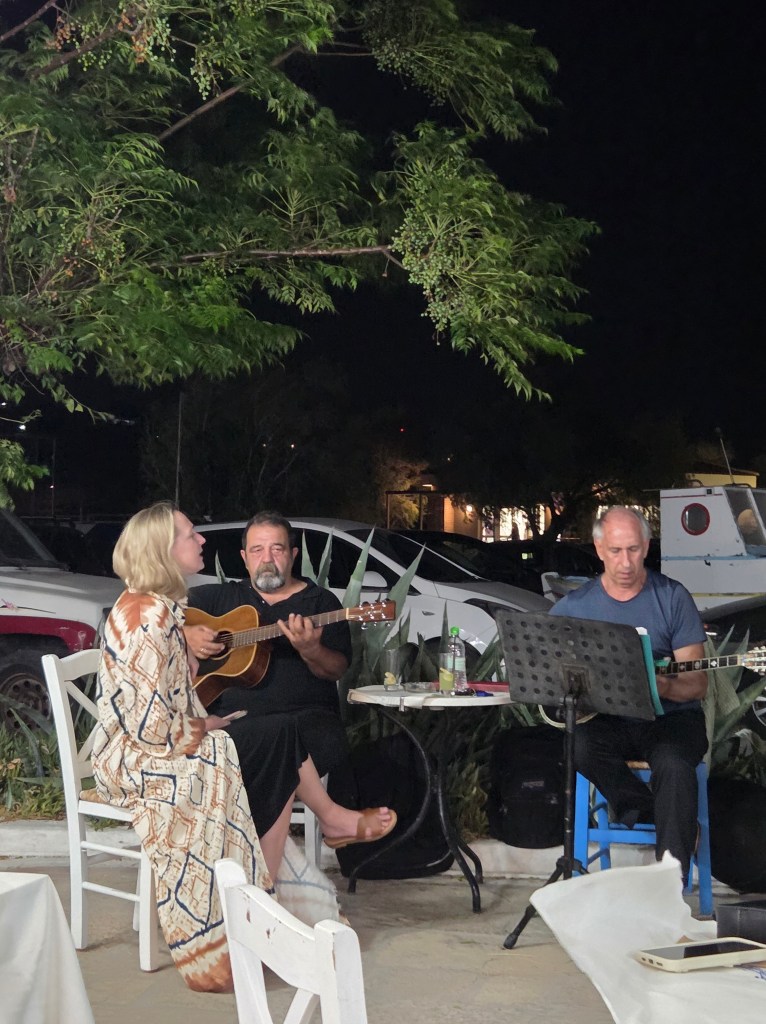
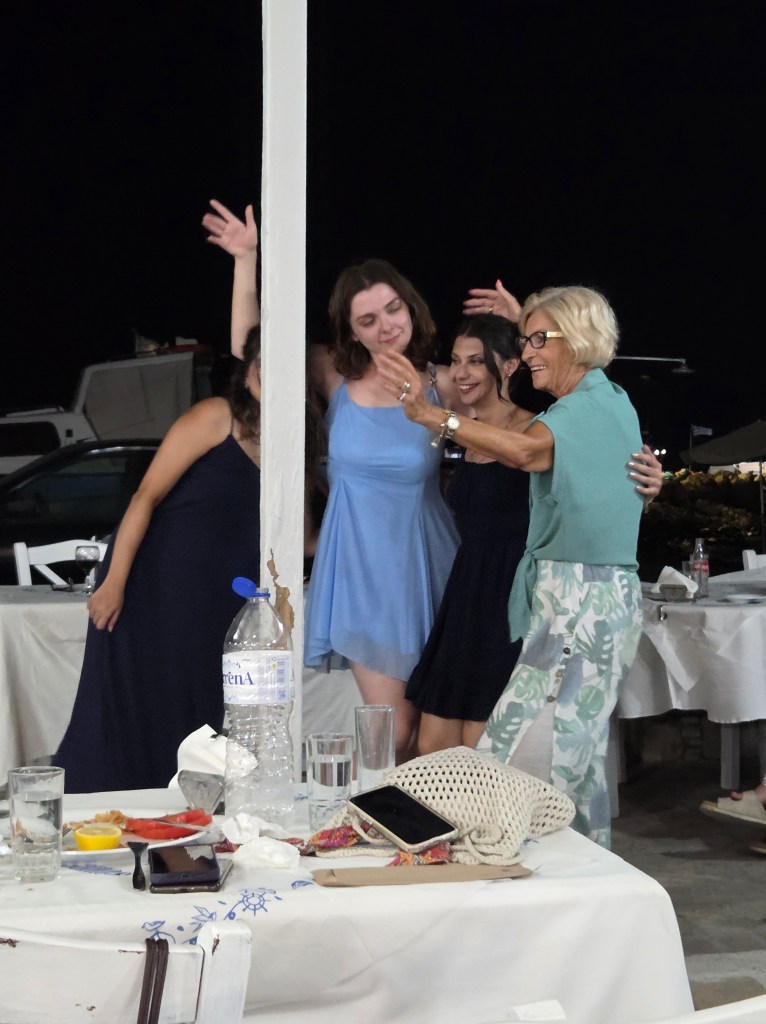
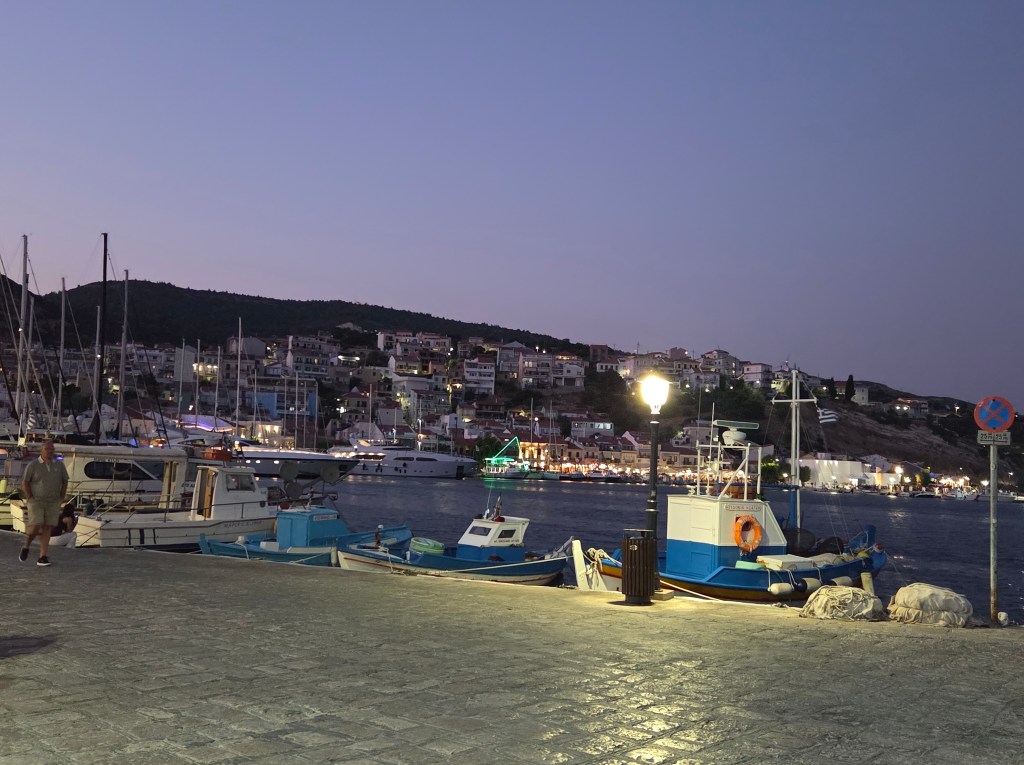
  • Our bed and breakfast is a lovely little apartment in Pythagorio -Mania. It is within walking distance of the town, shops, parking and the water. Of course the nightlife is hopping with a pedestrian walkway through the shops down to the harbour. There were lots of yachts in port, given the windy conditions for sailing – the Ferries were cancelled Friday due to the winds. We found a lovely little out of the way place at the end of the port, off the beaten path where local musicians played Greek classics from the 50s and 60s – not everyone’s tastes but very pleasant. We watched a group of young female tourists dance the sirtaki. Do they understand the lyrics? Music that reaches their souls.

  • After several delays ( this seems to be the reality these days) we arrived two hours late in Athens. Then the luggage took forever to retrieve. Other passengers with airtags said their luggage was sitting .2 km away and it was another hour before they finally came through on the baggage belt. Thank goodness our next flight was in 6 hours! While waiting we slipped outside to get a whiff of that beaufiful greek dry heat! Winds were very strong and boats were cancelled. But our pilot got us to Samos and landed safely!

  • Welcome to WordPress! This is your first post. Edit or delete it to take the first step in your blogging journey.

  • This content is password-protected. To view it, please enter the password below.